UI & UX DESIGN · PUBLIC SECTOR · 2025
Digdir - Klarspråkveileder Workshop Template
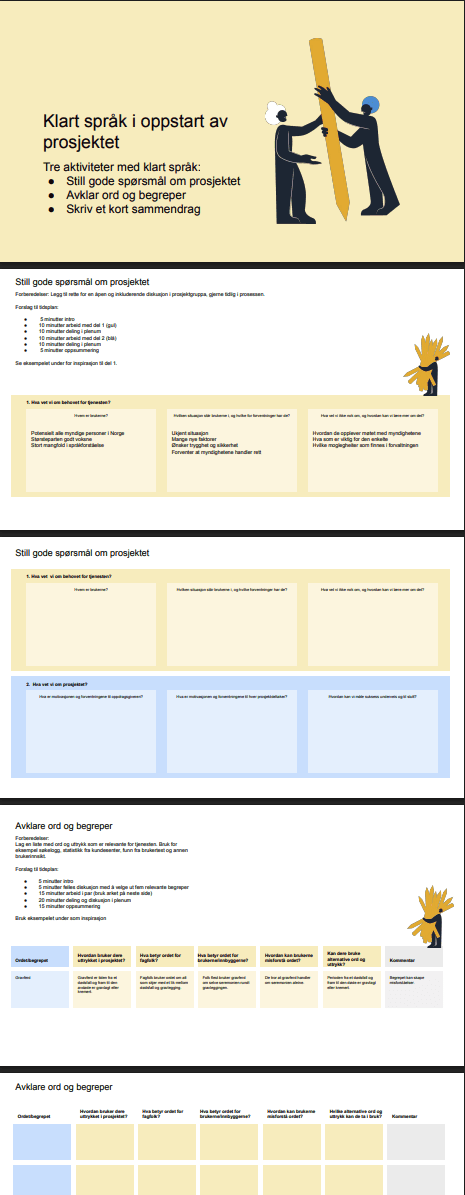
Digdir's plain language guide was methodologically strong and widely respected. It existed as a static PDF — and it worked well as a document. But when public-sector teams tried to use it in digital workshops, it fell apart. Without a designed structure, workshops relied heavily on the facilitator, and outputs were messy and hard to reuse.
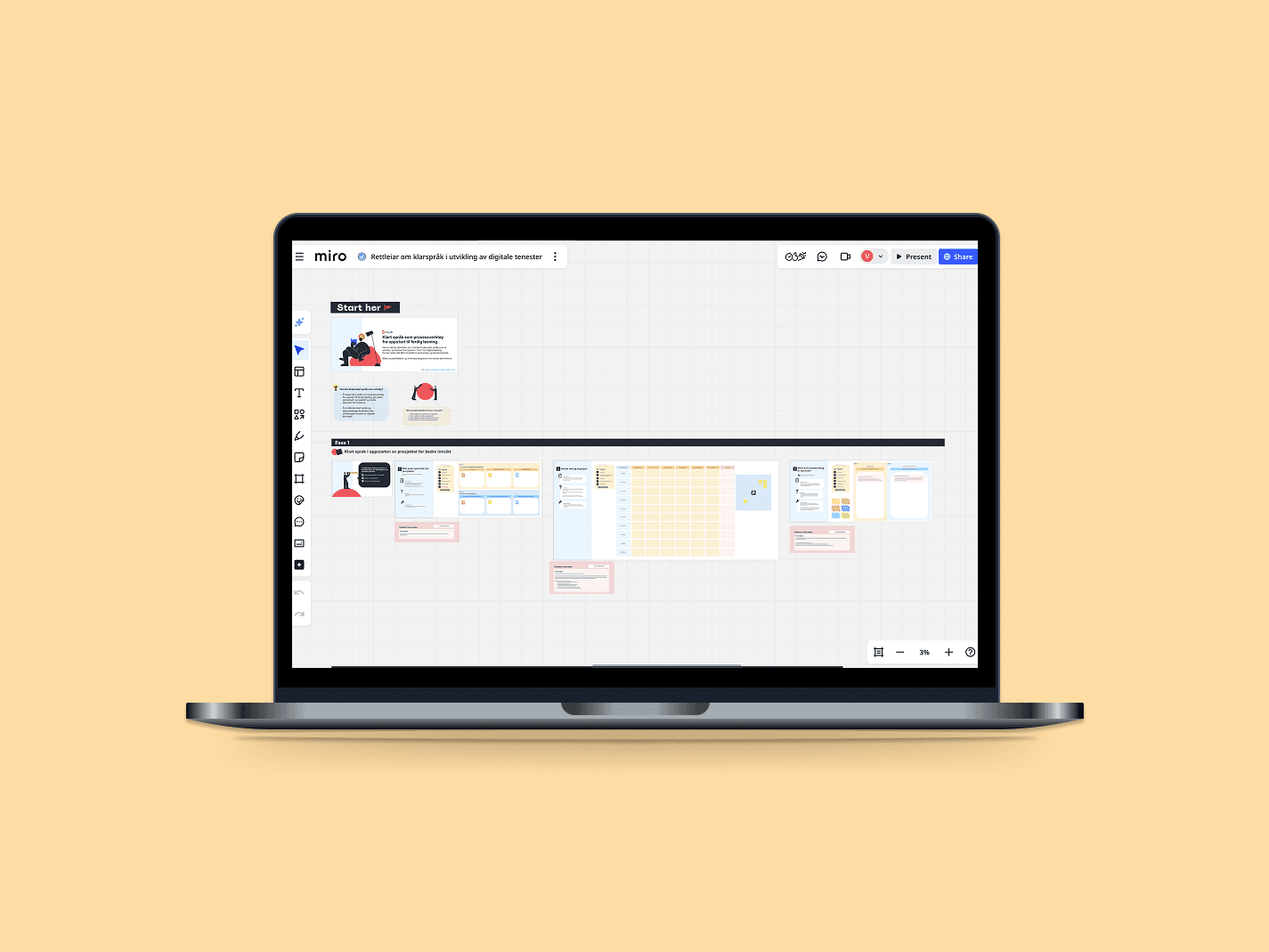
I was assigned by my product lead at Digdir to redesign the guide as a structured Miro template, to be published on designsystemet.no under guides and resources.
CASE OVERVIEW
ORGANISATION
Digitaliseringsdirektoratet
FORMAT
PDF - Workshop template
COLLABORATION
Content designers
ROLE
UX & UI Designer
PROCESS
Sprint-inspired (Jake Knapp)
STATUS
In use internally
FIRST ENCOUNTER
Before this project, I had thought about plain language mostly as a writing principle — clear sentences, simple words. What I did not expect was how deeply it would challenge my thinking about UX and UI itself.
Every label, every instruction, every prompt in the template was a UX decision. Too long and people hesitate. Too vague and people go off track. Precise, calm language turned out to be the most important design tool I had in this project.
CHALLENGE
The challenge was not adoption. Organisations wanted to use the guide. The problem was the format.
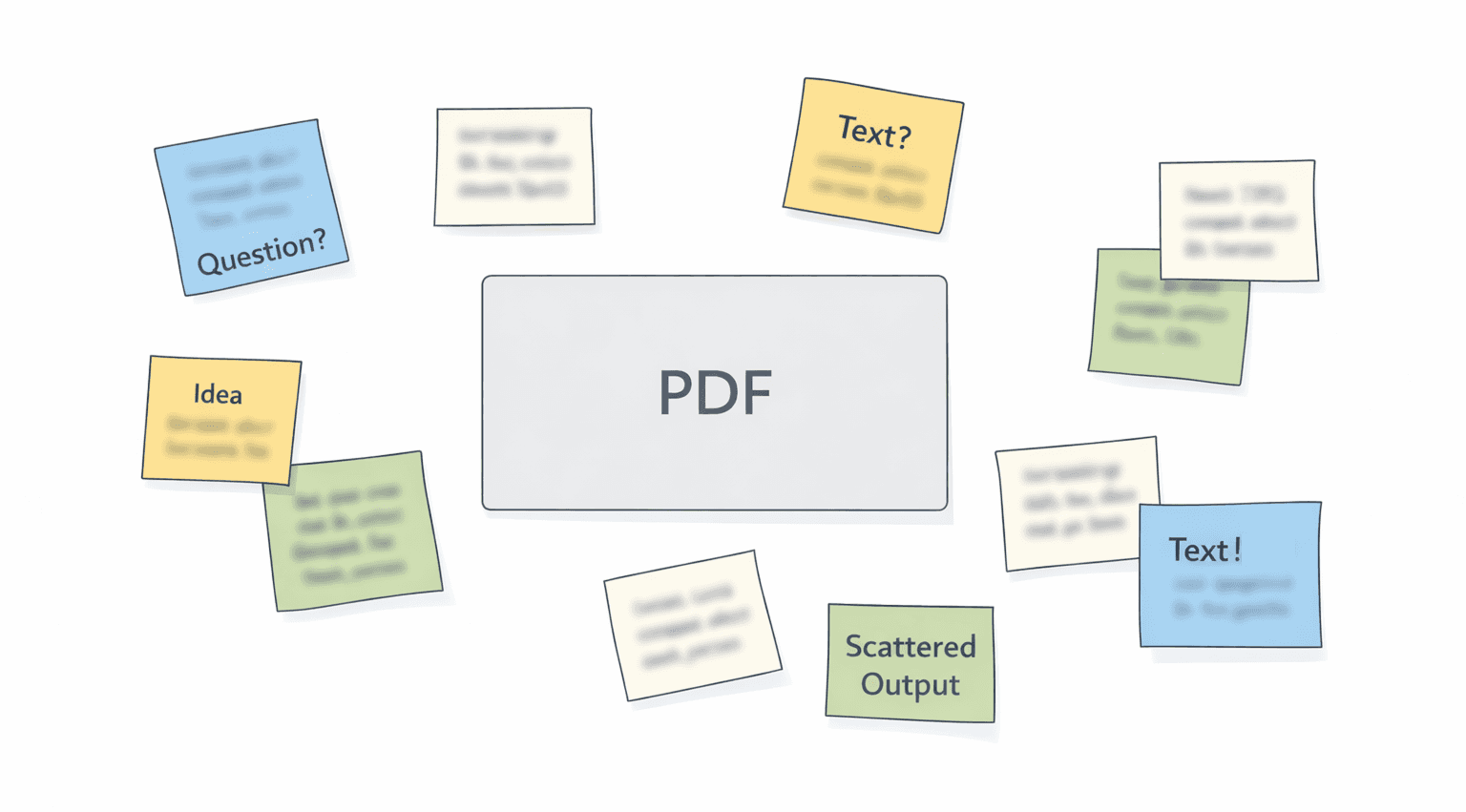
The PDF was copied into Miro and surrounded by sticky notes with no structure
Instructions had to be read aloud and interpreted by the facilitator
Facilitators became teachers rather than supporters
Outputs were messy and difficult to reuse across sessions
The methodology was strong, but the format shaped behaviour in unintended ways.
UNDERSTANDING THE SYSTEM
To understand the gap between methodology and practice, I observed workshops and spoke with designers and facilitators across public-sector organisations.
A clear pattern emerged. Participants needed something they could work in, not just read. Clarity had to exist without long explanations. Facilitators needed structure without scripts. And outputs needed to be reusable beyond the session.
KEY INSIGHT
The issue was not content quality. It was how the format influenced collaboration. The PDF told people what to think about plain language. The template needed to help them practise it.
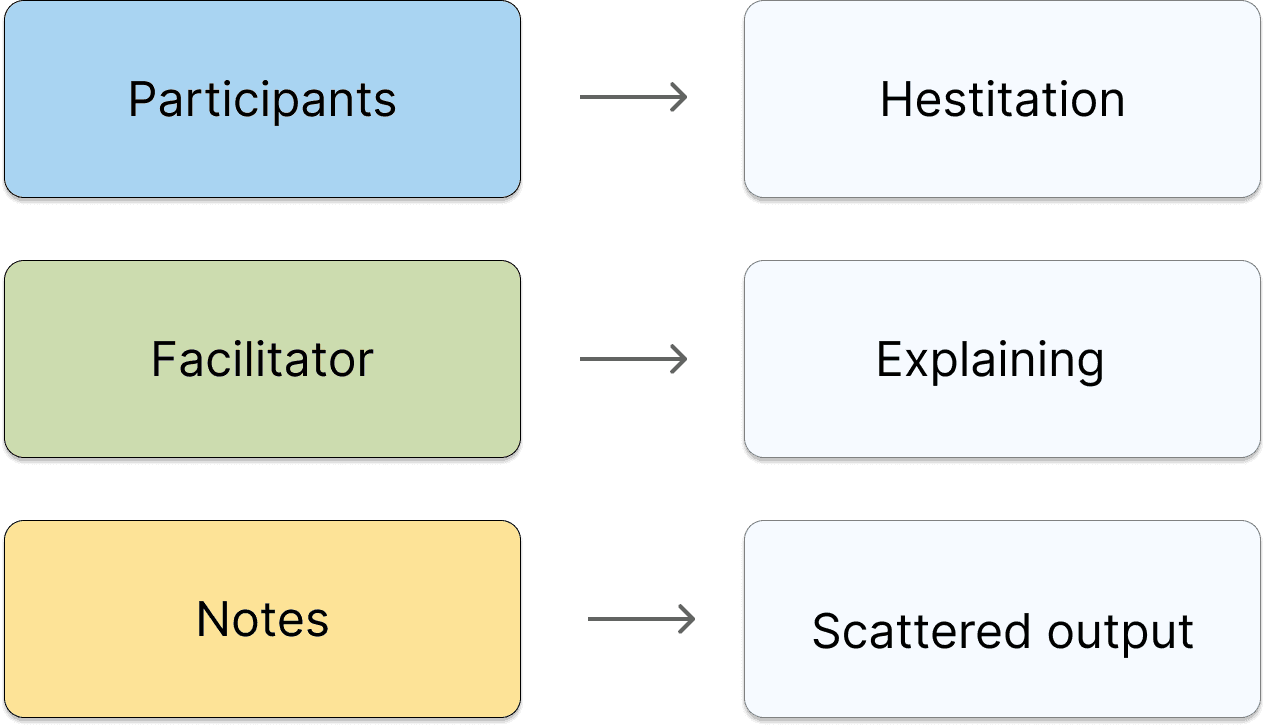
Collaboration patterns when static material shapes behaviour instead of designed structure.
EXPLORING
Instead of digitising the PDF directly, I reframed the challenge: how might we turn plain language from a document into a shared way of working?
Using a sprint-inspired approach based on Jake Knapp's methodology, I moved quickly from structuring and sketching to testing and refinement. The biggest challenge was that each activity in the guide was different — some were reflective, some generative, some evaluative. A single layout pattern could not serve all of them. I had to develop flexible activity structures that felt consistent without being rigid.
That tension between consistency and flexibility was the hardest design problem in this project.


Early exploration of workshop sequencing and activity structure across different activity types.
KEY DECISIONS
01
Structure over instruction
Each activity answers three questions: what are we doing, why it matters, and what the expected outcome looks like. This reduces the need for explanation and supports autonomy without relying on the facilitator to fill in the gaps.
02
Minimal activity text
Long explanatory paragraphs were replaced with concise prompts. This was the most direct application of the plain language principles the guide itself was teaching. Reducing text reduced hesitation and cognitive load — and made the template practise what it preached.
03
Facilitator guidance off stage
Support materials exist outside the main workspace. The board belongs to participants. This shifts ownership and increases engagement — the facilitator supports rather than leads.
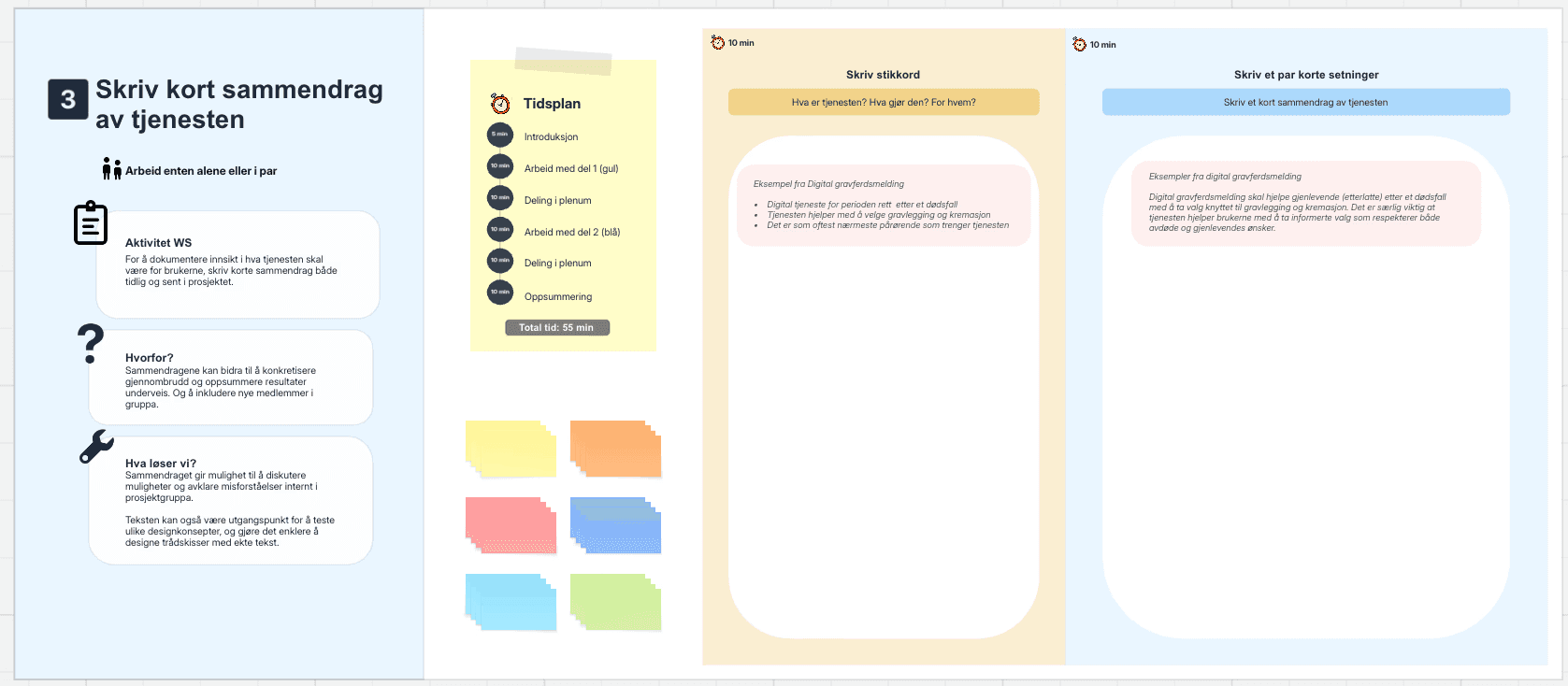
When there is nothing to build, the interface explains why and guides the user through the correct sequence.
04
Structured sticky note logic
Notes are tied to activities rather than individuals. This keeps outputs organised, comparable, and reusable beyond the session — solving one of the core problems observed in the original workshops.
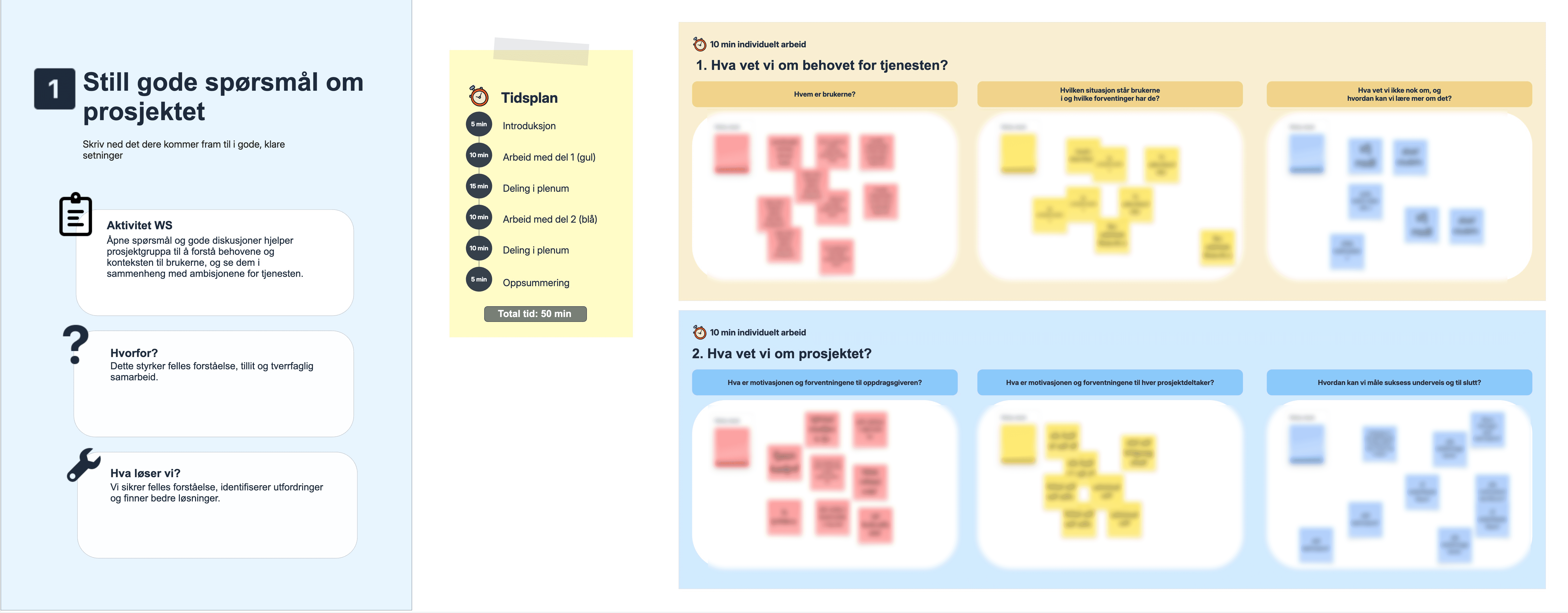
When there is nothing to build, the interface explains why and guides the user through the correct sequence.
05
Visual hierarchy for cognitive calm
Spacing, layout, and restrained colour use guide attention without noise. The template signals where to begin and how to proceed — quietly, without demanding attention for itself.
OUTCOME
The result was not a digital version of a document, but a structured collaboration tool. The template is now used internally and enables groups to collaborate digitally without additional explanation, understand purpose at a glance, and apply plain language as an active practice rather than a reference.
The value was not new content. It was improved usability of existing methodology.
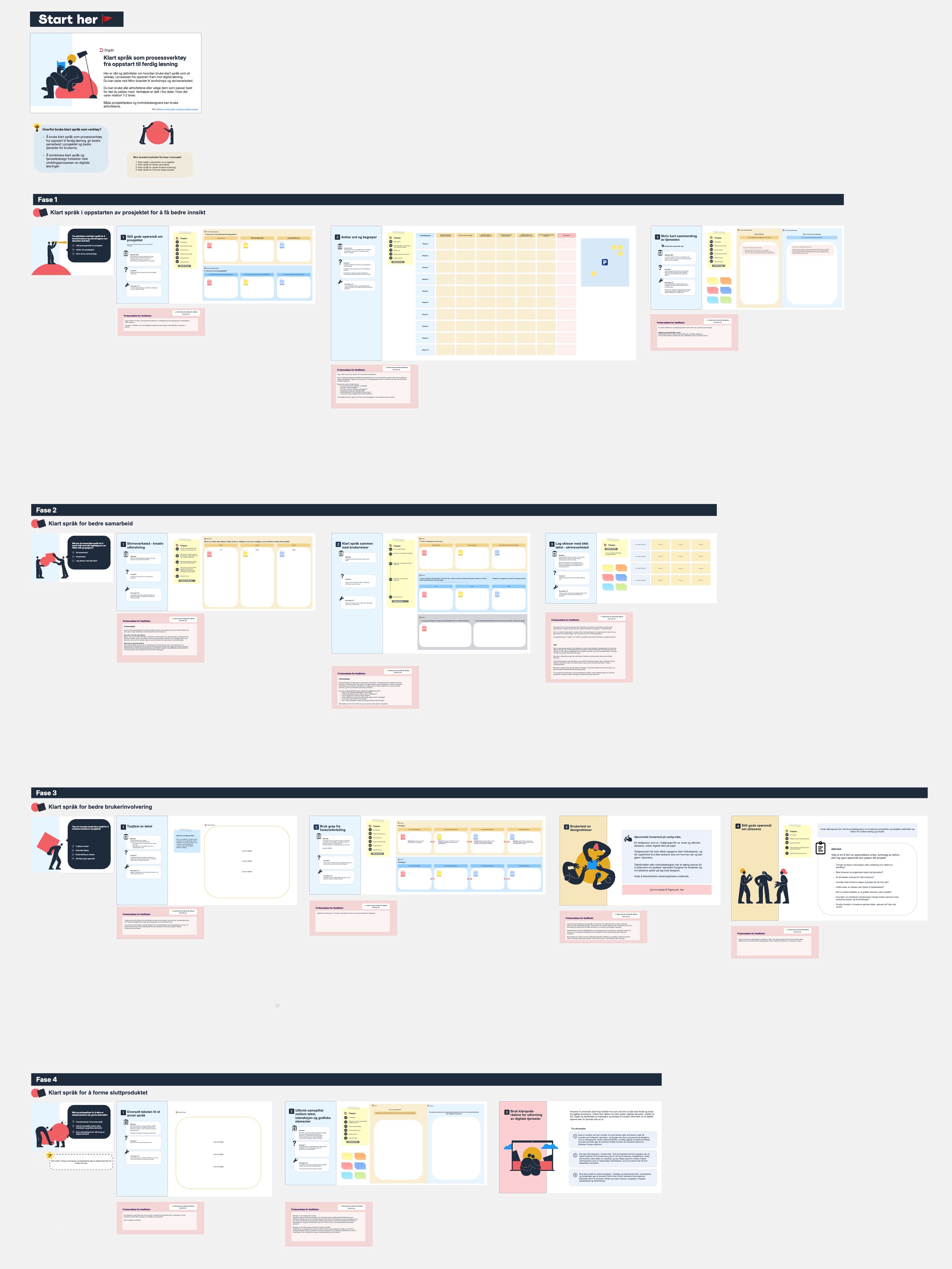
The complete Miro template across all four phases, and structured output generated through the template.
IMPACT
Reduced facilitation friction — workshops became more self-driven
Clearer and more reusable workshop outputs
Stronger cross-role alignment across public-sector teams
More consistent application of plain language principles
Approved for publication on designsystemet.no under guides and resources
REFLECTION
This project changed how I think about text in UX. I came in thinking plain language was a writing concern. I left understanding that every word in an interface is a design decision — and that how you phrase something shapes whether people act or hesitate.
The biggest design challenge was not the layout. It was finding a way to make each activity feel consistent without being rigid. Every activity in the guide was different — reflective, generative, evaluative — and a single template pattern could not serve all of them. That tension pushed me to design more flexibly than I had before.
I also learned that structure shapes participation more than facilitation style. When the template carried the instructions, the facilitator could focus on the room rather than the content. That shift was small in design terms, but significant in practice.
In public-sector UX, reducing ambiguity often creates more impact than adding features. Tools should not dominate the room. They should quietly support people in doing the work.